 |
OpenPFC
0.1.4
Phase Field Crystal simulation framework
|
|
OpenPFC
0.1.4
Phase Field Crystal simulation framework
|
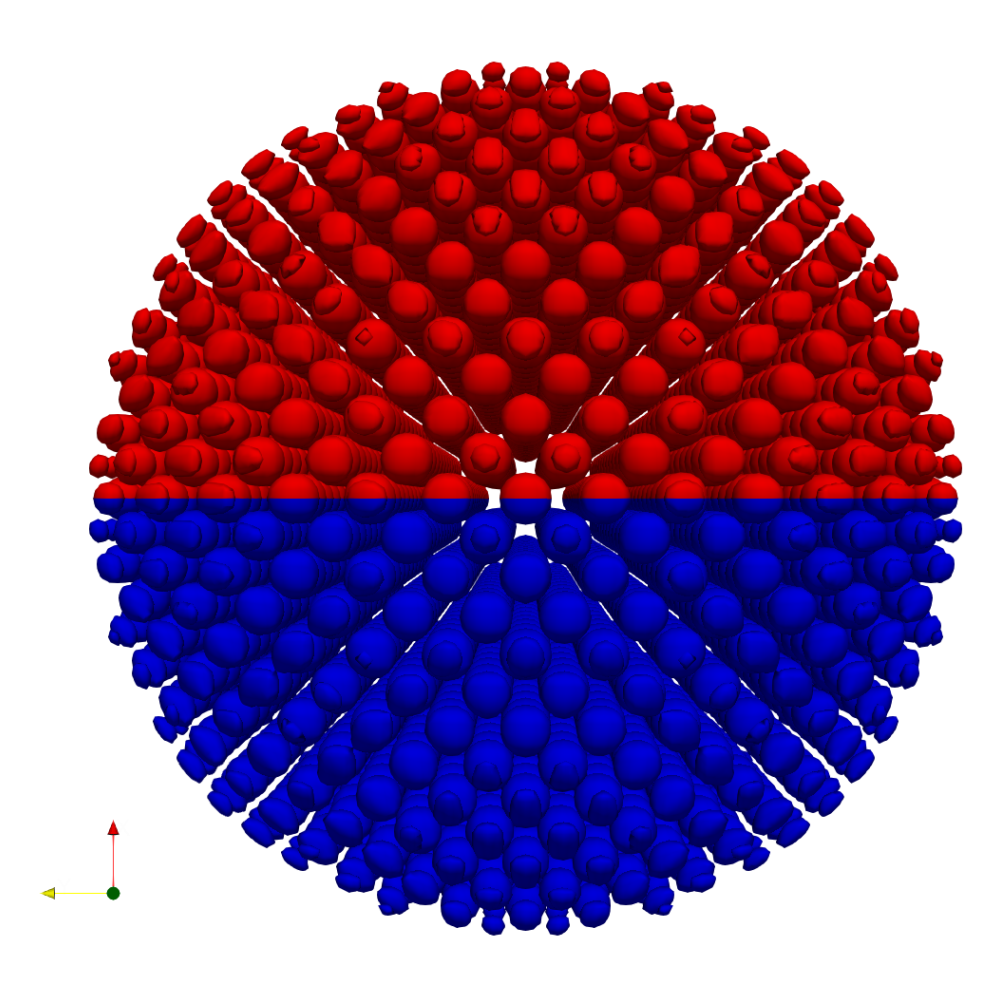
Once the World object has been defined, the next step is to determine how the world will be divided among different MPI processes. In OpenPFC, the calculation area is partitioned into smaller parts using the Decomposition class. This class utilizes the excellent functionality provided by HeFFTe. The partitioning is done in such a way that minimizes the surface area between the regions, which in turn minimizes the MPI communication required during FFT calculations. In the example, we can see how the domain decomposition can be done "manually". However, in practice, it is most effective to divide the calculation area into the same number of parts as the number of computing nodes allocated from the HPC cluster.
This example demonstrates how to use the World class to create a simulation world and after that, decompose world to smaller domains using Decomposition class.
 1.9.8
1.9.8